Escaping Flashman: Still happy with Orange Turnpike

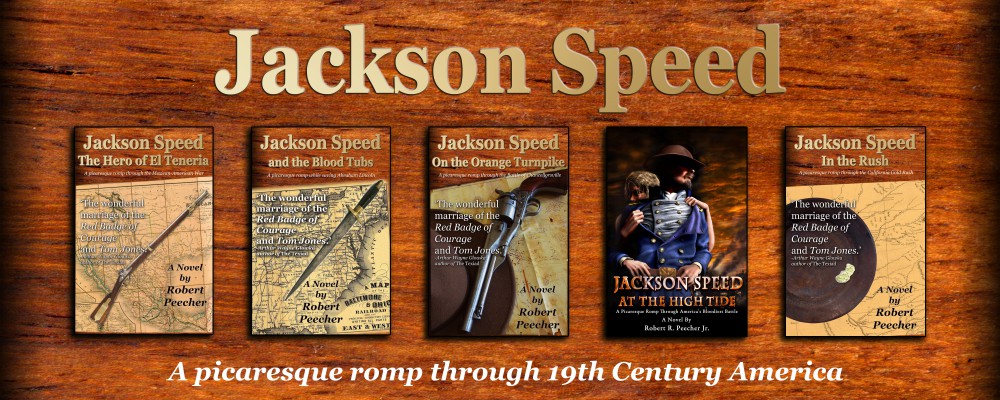
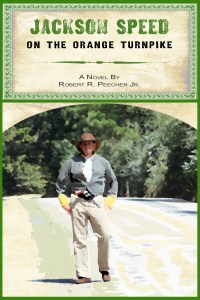
Orange Turnpike CoverI’m less than a week from the release of the third Jackson Speed book, and I’m still very excited about “Jackson Speed on the Orange Turnpike.”

I think most people who write for a living will tell you that as time goes by they become less enthralled with works they might have initially been very excited about. Whether it’s news stories or humor columns or political editorials or novels, any time I look back at my work I inevitably cringe.

“I can’t believe I wrote that,” I’ll think.

“I could have done so much better,” I’ll mutter to myself.

“Oh, Lord,” I’ll say out loud, “that was terrible.”

Lately I’ve given some serious consideration to completely rewriting the first Jackson Speed book. I probably won’t. But I might.

When you’re a journalist and you make your living writing stories on a daily or weekly basis, you don’t have time to cringe every time you write something, and you certainly don’t have the opportunity to go back and rewrite. You learn quickly to accept that it’s never as good as you wanted it to be and you just keep moving forward.

With the first Jackson Speed book, I was like a man possessed.

I loved the idea of the character, and I didn’t want Jackson Speed to go the way every other attempt at fiction writing had gone for me: Start and never finish. I’ve had other ideas before. I’ve worked for days and weeks on other novels, but eventually I grew bored with the story and quit.

But when I first had the idea for Ol’ Speedy, I really wanted to write and finish the Jackson Speed series. So I was frantic about it. I wrote almost non-stop for 28 days to finish the novel. I skipped meals, wrote at work and stayed up all hours.

And when I finished it, I sent it to my editor, India Powell and Lighswitch Communications, and I was done with it.

The second and third books did not go at quite the same pace. I slowed down, took my time and, I think, produced a better product.

I’ve made no secret about the fact that some of the inspiration for Jackson Speed comes from George MacDonald Fraser’s Harry Flashman. I also don’t claim that Jackson Speed is the next Harry Flashman. George MacDonald Fraser was a master, and I’m just having fun writing.

But there are similarities between the two that can’t be avoided: Flashman and Speed are both cowards masquerading as heroes; they’re both womanizers; they’re both brutally selfish; they’re both bullies.

At the same time, when I wrote the first Jackson Speed novel I wanted to make sure I was not writing about Harry Flashman – which is a hard thing to do because Flashman is such an overwhelming character if he’s in your mind – so I was deliberate in trying to make the characters different. I may have even been too focused on Flashman and not focused enough on Speed.

But somewhere early in the second book, Harry Flashman left my mind. As I wrote, Jackson Speed began to develop his own voice. Instead of thinking about Speed as a character, I really started to hear his voice in my mind. It started to become more natural to write Jackson Speed.

While retaining all of those qualities borrowed from Flashman that make Speed a character I enjoy writing about, I finally felt in the second book that I had broken free of forcing Speed to not be Flashman – Speed’s voice was clear in my mind. He’d truly become his own character.

I told India that I felt like I hit my stride, especially in the last chapter of Blood Tubs, and I kept with it through all of the Orange Turnpike.

As a writer with 20 years of experience, I know it won’t be long before I start thinking about specific passages or chapters in this third book and start thinking that I should have written something differently. It won’t be long, I suspect, before I’m standing in front of a crowd reading from the book and I cringe at a phrase or a word choice or maybe an entire paragraph.

But for now, I am very happy with Jackson Speed on the Orange Turnpike, and I’m excited for Speedy’s fans to read the book!

Regretting a phone call I never made

James Guthrie was the first in a long line of excellent reporters I’ve hired over the years, and not only was he one of the best writers and storytellers I’ve ever had the pleasure to work with, he was also a good friend.

James Guthrie, reading The Oconee Leader. This may be the closest thing to a photo of the two of us together.

James Guthrie, reading The Oconee Leader. This may be the closest thing to a photo of the two of us together.

A year ago (April 12), I learned of his death on Facebook, which is all kinds of ironic because Guthrie was not a Facebook kind of guy. He was an outdoors, hunting and talking to you face-to-face kind of guy.

I was just finishing up my 2012 taxes. I opened up Facebook and my news feed was full of photos of Guthrie. This was a weird thing because Guthrie didn’t post a lot of photos of himself on Facebook. I glanced at the caption under one of those photos and saw a remark about how much Guthrie was going to be missed. Then I started reading all of the captions under the photos, and then I started trying to imagine reasons for people to be saying the things they were saying that didn’t involve Guthrie having died.

James was younger than me. He had two young children. He had nothing but a glorious life ahead of him, and nothing in my life’s experience helped me to get my head around the fact that he could have died so young.

I guess it made it worse, too, that Guthrie was one of these people who absolutely gets everything he could out of life. Every time we talked he had stories of new hunting adventures in Africa or South America or Canada. Or he was on his way to a gun range somewhere to play with some really cool toys that I can never hope to have a chance to shoot, much less afford.

I think anyone who knew him would agree with me: Learning that James Guthrie was dead was like a kick in the damn gut. I was torn to pieces.

A couple of months before his death I sent Guthrie a private message on Facebook. I just wanted to catch up, and because I’m always too busy for anything, I wanted to do it on my time when it was convenient to me. I wanted him to just send me a response and tell me how wonderful his life was with his beautiful family and where his next adventure was going to take him.

But Guthrie wasn’t a Facebook kind of guy, so instead of sending me a quick we’re-caught-up-now message on Facebook telling me life was wonderful and his family was beautiful, all he said was, “Call me.”

Well … you know me. Monday is deadline day at the paper and I’m up all night working, and Tuesday I sleep late and Wednesday somehow turns into Friday and Saturday and Sunday I’m on soccer fields and then it’s Monday again. At the time, too, I was finishing up Jackson Speed & The Blood Tubs and Four Things My Wife Hates About Mornings, so I was busy with books.

A week went by and I hadn’t had a chance to call him. Then another week. Pretty soon, two months had gone by and I hadn’t called him.

And then I learned on Facebook that I’d missed my opportunity.

I thought about calling him all the time. In the car, at the office, after dinner – but I kept putting it off. Not for any reason, I was just always too busy for anything.

I’ve tried very hard to live a life that minimizes regrets, and I can say with all honesty that I have a very, very few. But not calling Guthrie still haunts me a year later.

It’s easy to get lost in our own worlds – work, kids, projects, The Walking Dead marathons … whatever it is that occupies all our time.

But I would really, strongly urge you: No matter how busy you are, don’t let a good friend’s last words to you be “call me.” You’ll regret it if you don’t make that call.

Free ebook through Story Cartel

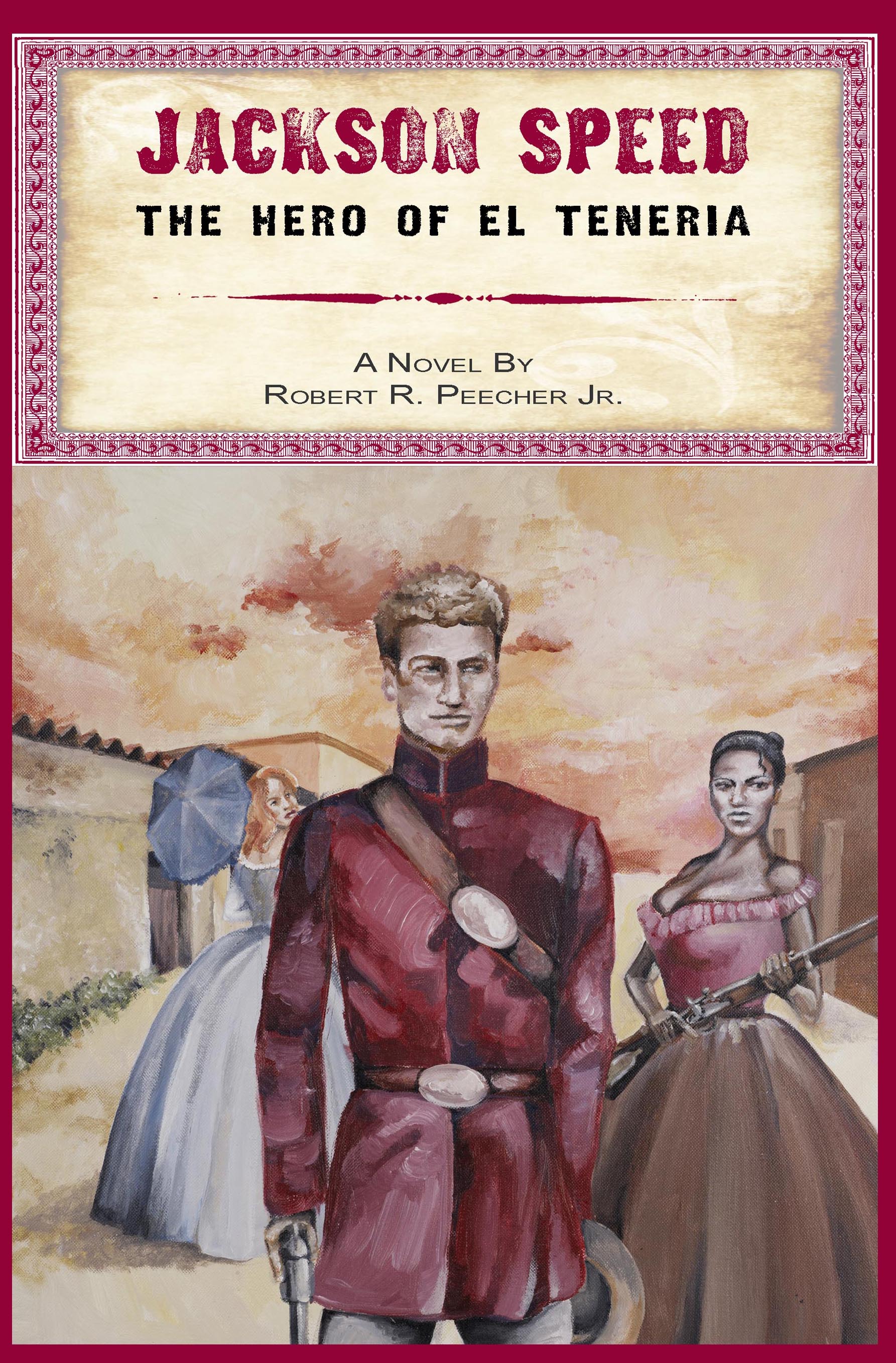
With the third Jackson Speed book set to come out in just a matter of weeks, I’ve decided to try Story Cartel to generate new interest in the first book of the series.

Click the cover to buy the book!

Click the cover to buy the book from Amazon!

For the next 20 days you can download Jackson Speed: The Hero of El Teneria free through Story Cartel. Part of the deal is that they ask you to write a review of the book, and I hope those who download El Teneria for free will leave a review.

Reviews on Amazon and Barnes & Noble (but especially Amazon) help unknown writers like me sell books. The more reviews (positive, preferably) the better the odds more people will be interested in reading my book.

So, if you have not yet read El Teneria, now is a great opportunity to snag it on the cheap and help me out. And if you have read it and have not yet left a review, please give a thought to reviewing El Teneria. Blood Tubs, too. And 4 Things, too. I have lots of books needing reviewing from kindhearted and generous critics full of happy adjectives.

Those who download the book through Story Cartel and leave a review will be entered to win one of five paperback books.

And if you’re intimidated at the thought of “reviewing” a book, just post a short blurb that says something like: “Wow! What a book! Loved that scene with the battle of the boat.”

Click here to go to Story Cartel if you want to get a free copy of El Teneria.

Are there layers to Jackson Speed?

I have this image in my mind of Jackson Speed, the old man, sitting at his desk in his home in Madison, Georgia. Hair and whiskers have gone white, the old wounds from battle ache. He doesn’t get around as well as he used to, but he’s outlived nearly all of his enemies.

He sits over his papers, furiously writing, as he recalls the events of his life: The battles he fought in, the people he knew, the women he got belly-to-belly with. Especially the women. They are his favorite part to reminisce about.

I think for Speed, the battles, the generals, the presidents – they are all just a backdrop against which he fondly recalls the women of his life.

Marcilina de la Garza dancing at the fandango in Cervallo.

Eliza Brooks in a California stream, “Jack Speed, we’re covered in gold!”

Kate Cherry disguised as a Yankee soldier, kissing him outside McClellan’s tent.

Jenny Rakestraw, “It’s an awful world Jack. I despise it, every bit of it. I am broken hearted and downtrodden. I have abused my body and cast aside my morals for a cause I don’t know that I continue to believe in. And so now I just want to go home. And it’s a fact, Jack, if I found you at home with me, I wouldn’t be too disappointed.”

And, of course, Ashley Franks tempting our young hero with her peach cobbler.

They’re old memories, but I think they keep him going.

I never know if Ol’ Speedy is being completely honest with us. I have to wonder if he ran quite as fast as he claims to have run or if the women were ever quite as willing as they are in his memory.

He’s been accused, by a history professor who has read some of his memoirs, of exaggerating his own cowardice. I suppose that’s possible. I suspect, for those who grew up with the Jackie Speed legend and imagined him as a brave and daring adventurer – a war hero, an Indian fighter, a gunslinger, a Pinkerton – it’s hard to read his confessions of cowardice and accept them as fact.

When I read his memoirs, I assume that he’s telling us the truth when he says he ran or hid, but I’ve always wondered if the old man didn’t concoct at least some of his dalliances.

Many of the people who have read the Jackson Speed memoirs have used words like “rascal” or “scoundrel” to describe him, but I wonder if maybe even in his memoirs he’s not playing us a bit. Is Jackson Speed as awful as he tells us he is, or do there exist layers worth exploring?

Next Speed book coming soon

Last spring I was diligently working on the Jackson Speed books, churning out pages like a Civil War history machine.

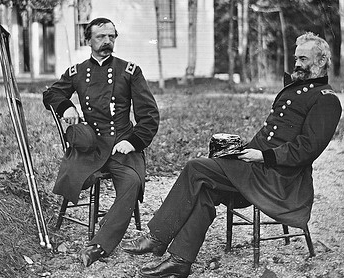
Devil Dan Sickles (left) ... Something seems to be missing.

Devil Dan Sickles (left) … Something seems to be missing.

My plan was to finish in the summer of 2013 the third and fourth Speed books. The third book sees Speed into the battle of Chancellorsville, and the fourth book answers how it was that Speed fought for both the Confederacy and the Union at Gettysburg, and how he managed to win the Medal of Honor from Lincoln.

Another great Civil War mystery is also solved in the fourth book, and I am certain there are historians everywhere who are salivating with anticipation over the release of this book so that they can, for the first time, have a definitive explanation for why Dan Sickles sent the Third Corps out into the Peach Orchard on the second day of Gettysburg.

Anyone familiar with the battle will know that Sickles’ Third Corps of the Army of the Potomac woke on the morning of the second day at Gettysburg in a strong position on Cemetery Ridge. General George Meades’ lines stretched in the famous “fish hook” from Culp’s Hill around Cemetery Hill and down Cemetery Ridge to the Round Tops.

It was good ground that Meade held.

Confederate Gen. James “Old Peter” Longstreet knew it was good ground. He advised Lee not to attack the Union’s defensive position but to skirt south of the Army of the Potomac, find a good defensive position of his own between Meade and Washington D.C., and let the Federals crash upon the Confederate shores (as they had at Fredericksburg eight months earlier). Lee, of course, rejected Longstreet’s advice, and the result was one of the most famous charges of all history. Charges (like Last Stands) are usually famous because of how disastrous they were. The Charge of the Light Brigade. The Charge of Krojanty. Pickett’s Charge.

Inexplicably, on the morning of the second day of the battle, Sickles decided to warp the fish hook.

He pushed Berdan’s sharpshooters into Pitzer’s Woods where they encountered Confederates.

Then, around noon on the second day, Sickles pushed the entire Third Corps forward into the Peach Orchard.

So many of those who witnessed it wrote later about the grand style in which the Third Corps of the Army of the Potomac marched forward: Lined up in columns; Flags unfurled; Bayonets gleaming in the sunshine.

General Win Hancock would be my pick for the best Union general on the field on the second day of Gettysburg. Commanding the Second Corps of the Army of the Potomac and positioned just to Sickles’ north on Cemetery Ridge, Hancock had a good view of the Third Corps’ march in the Peach Orchard.

Hancock was standing with General John Caldwell, who remarked how magnificent the Third Corps looked as it stepped off Cemetery Ridge in grand style and went forward to the Peach Orchard.

“Wait a moment,” Hancock said, “and you will see them come tumbling back.”

Robert E. Lee’s attack plan called for an echelon attack beginning on his right flank and moving left, so the first Confederate troops to set out came out of Pitzer’s Woods and attacked into the Devil’s Den and the Peach Orchard and along the Emmittsburg Road where Sickles had moved the Third Corps.

The Third Corps was destroyed.

Sickles, who was a politician and not a general, personally paid for his folly. He lost his leg at Gettysburg when a cannonball shattered it. He was stretchered from the field.

More tragically, the Third Corps also paid for his folly. It was reduced to such an extent that it was no longer recognized at Gettysburg as a combat unit. Reserves had to be pushed up to fill the void on Cemetery Ridge – the original position held by the Third Corps. Hancock had to order troops into a suicide bayonet charge to hold the Rebels off long enough to get reinforcements up to Cemetery Ridge, so I suppose those poor Yankees paid for Sickles’ folly, too.

Because he was a politician, Dan Sickles was able to secure for himself the Medal of Honor. In my studies of military history, I have determined that politicians did not always make excellent generals, but they were remarkably successful in spinning their failures into chest decorations.

What’s puzzled historians over the years is this: Why? Why did Dan Sickles give up a good defensible position? Cemetery Ridge was a position his enemy (at least in the case of Longstreet) did not want to attack. Go to the field yourself. Stand on Seminary Ridge and look at Cemetery Ridge. You don’t need to be a West Point graduate. Common sense will tell you that you hold that ridge.

The answer from Sickles and the one most historians have accepted is that the Peach Orchard presented a small rise in the low ground between the Union and Confederacy. Sickles claimed that the Peach Orchard appeared to him to be a position from which the Confederacy could establish artillery and threaten the Union lines.

This is, of course, absurd nonsense!

Now, 150 years later, the truth is poised to be revealed.

Jackson Speed, in the upcoming book “Jackson Speed at the High Tide” (the fourth book in the Jackson Speed memoirs), reveals the true reason why Sickles sent the Third Corps forward to its destruction.

But, as I said from the outset, my plans to release the third and fourth books in the Jackson Speed series got delayed considerably.

Editing memoirs (or writing fiction, whatever) takes time, and sometimes you think you’ve got a chapter edited (or written, whatever) and you find you have to go back and re-edit it (or write it, whatever).

So I’ve been delayed a bit. The third book, Jackson Speed on the Orange Turnpike, should be out in a matter of just a few weeks now. The fourth book – the one where Sickles is revealed to have been just as nuts at Gettysburg as he was when he ran into Francis Scott Key’s son in Washington D.C. – should follow in a few months.

If you’ve been eagerly anticipating the arrival of the next Speed book and thought you would have it by now, let me say two things: 1. I’m sorry. I’m working on it! I promise it’s coming soon. And 2. Jackson Speed on the Orange Turnpike will be better for the wait. I promise.

Latest Jackson Speed story now available

I am working to get Volume III of The Jackson Speed Memoirs in a publishable state, and hope to have it done before August is out.

Volume III will contain a relatively short novel which features Jackson Speed in the Battle of Chancellorsville and leads directly into Volume IV in which our hero is at Gettysburg.

But there is an episode in Ol’ Speedy’s life that is worth knowing before you read about his exploits in Gettysburg. It’s just a short episode, a “short story” if you will, and I’ll also be including that in Volume III.

But, because I know that you, like so many women in the 19th Century, can’t get enough of Jackson Speed, I have decided to go ahead and publish the short story here on my blog. I’ll probably be taking it down when I actually publish Volume III, but for now it is available and free to read. Print it (it’s about 28 pages printed, I think), read it on your computer, whatever you like.

It can be found under the “Short Fiction” tab at the top of this page, or by clicking here.

If this story serves as your introduction to Jackson Speed and you like what you see, I’d be delighted if you would check out Jackson Speed: The Hero of El Teneria and Jackson Speed and the Blood Tubs.

Another Gettysburg 150 book give away

Today (July 1) begins the 3-day sesquicentennial of the Battle of Gettysburg, and I’m still giving away Jackson Speed books in recognition of the anniversary.

I have two more questions and the first person to answer one or both correctly wins a book.

Question 1:

At 10:15 a.m. on July 1, 1863 – 150 years ago right now as I post this – the commanding Union general on the field in these first hours of the battle was shot through the back of his head as he turned in his horse looking to direct reinforcements coming up from the Emmistburg Road. He was at the edge of McPherson’s Woods when he was shot. Historians debate if it was a sharpshooter, a volley or even friendly fire that brought him down, and some place the time of his death a little later than 10:15. General Meade, who commanded the Army of the Potomac at Gettysburg, said of this general that he was his “noblest and bravest.” This general also turned down command of the Army of the Potomac because he feared he would not have the ability to command the army has he saw fit due to interference from Washington D.C. Who was he?

Question 2:

Around 1:30 p.m. on the afternoon of the opening day of the Battle of Gettysburg a Confederate brigadier serving under Division Commander Robert Rodes ordered his men on Oak Hill to attack at the base of the hill in a wheat field just south of the Mummasburg Road. His 1,500 North Carolinians advanced (while their brigadier remained behind), unable to see that there were superior numbers of Federals hiding behind a stone wall. The Confederates were completely exposed. When they were at nearly point-blank range, the Union soldiers – who vastly outnumbered the North Carolinians – stood from behind their stone wall and fired into the mass of butternut. In a flash, 500 men were killed and fell dead in almost a straight line. Some of the men accused their brigadier general of drunkenness or cowardice or both. The “pits” where the North Carolinians were buried in common graves were forever named for this brigadier who so poorly led his men. Who was he?

Use the form below to send me your best guesses. And, as always, if you are too lazy to Bing the answer, you can always just go to amazon.com and buy the books.

← Back

Thank you for your response. ✨


Gettysburg 150 book give away

In recognition of the sesquicentennial of the Battle of Gettysburg, I’ve decided to give away some signed Jackson Speed books.

The rules are pretty simple: be the first to answer some Gettysburg trivia questions and win a book.

Here are the next two questions. Answer either of them correctly and you can win your choice of “Jackson Speed The Hero of El Teneria” or “Jackson Speed and the Blood Tubs.”

1. On June 29, 1863, Federal cavalry rode into Gettysburg and occupied the town. These Union troopers were the first to fight the Confederates in a holding action until Union infantry could get up. Who was the commander of the Union cavalry that occupied Gettysburg and held McPherson’s Ridge on the morning of July 1 while waiting for Reynolds to get forward?

2. The Confederates went into Gettysburg looking for shoes. They first tried to get to the town on June 30. Who North Carolinian general led the brigade that marched toward Gettysburg on June 30 but turned back after encountering two brigades of Federal cavalry?

Use the form below to shoot me an answer to either of the above questions if you think you’ve got the answer. I’ll let you know if you win and put a signed book in the mail to you!

As always, if you don’t know the answer and your fingers are too tired to Bing the answer, feel free to visit amazon.com and just buy a book!

← Back

Thank you for your response. ✨

Giving away books for Gettysburg Sesquicentennial

I’m working on Volumes III and IV of the Jackson Speed books.

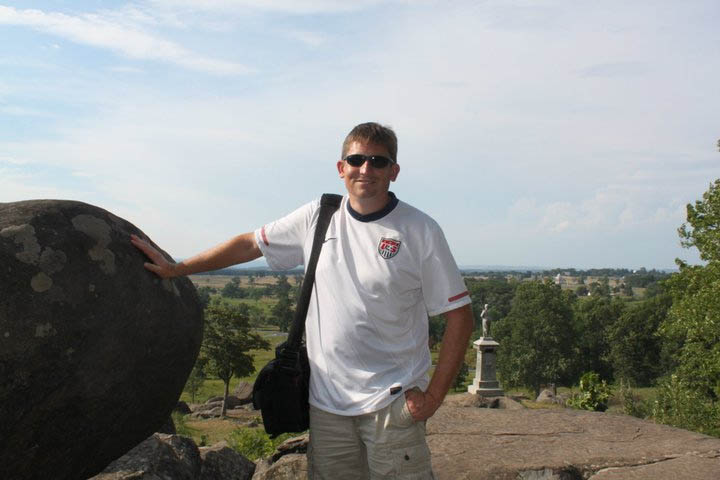
From Little Round Top at Gettysburg, overlooking the wheat field and peach orchard.

From Little Round Top at Gettysburg, overlooking the wheat field and peach orchard.

Volume III, which sees Ol’ Speedy through the Battle of Chancellorsville, is very nearly done. My editor, the lovely and brilliant India Powell, is finishing editing the last chapter or two this week.

Volume IV takes up Speedy’s fascinating role in the Battle of Gettysburg. Speed enthusiasts are likely aware that he won the Congressional Medal of Honor during this battle, a startling fact considering that he is the 19th Century America’s biggest chicken-hearted rascal.

I still have a ways to go in writing Volume IV, but it should be out before Christmas.

As I write about the Gettysburg Campaign, it is not lost on me that we are rapidly approaching the 150th Anniversary of that famous battle.

In recognition of that, I thought I might give away a few signed books during the Sesquicentennial of Gettysburg. The first opportunities to win a signed book come today.

Two big events happened 150 years ago this week in the Gettysburg Campaign. 150 years ago yesterday (June 26), the first of the Confederate troops marched through Gettysburg, spending a little time in the town but they weren’t there long because they were bound for York, Pennsylvania. While there, they happened to hear a rumor that there was a large quantity of shoes in the town, something their army desperately needed.

Be the first to tell me who commanded the Confederate force that moved through Gettysburg on June 26, 1863, and I’ll send you a signed copy of either El Teneria or Blood Tubs.

150 years ago tomorrow (June 28) another big event happened. General Hooker was replaced as the commander of the Army of the Potomac (the order was issued 150 years ago today and Hooker received the order on June 27, but the man who replaced him received word of his promotion on June 28).

Be the first to tell me the name of the Yankee general who replaced Hooker and was the commanding Union general at Gettysburg, and I’ll send you a signed copy of either El Teneria or Blood Tubs.

Or if you don’t know Gettysburg trivia and just want to get the Jackson Speed books without all the hassle of answering a question, you can still get them through Amazon.com by clicking this link.

Use the contact form below to send me your answers and I’ll let you know if you’ve won a book!

← Back

Thank you for your response. ✨