Lost in research, and a chance to win a signed copy of the next Jackson Speed book

The trouble with writing historical novels is getting lost in your research.

I write at a pretty rapid pace. The first of the Jackson Speed novels (at 75,000 words) took 28 days to write. The second novel (about 85,000 words) took four months, but there were a couple of long periods when I didn’t write at all because other projects were occupying my time.

A cover from one of the issues of Harper's Weekly.

A cover from one of the issues of Harper’s Weekly.

I am currently writing the third novel and that is also moving along rapidly. My goal is to have it finished by late April.

I’ve written one thing or another all my life, and particularly as a journalist I am accustomed to writing quickly under deadline pressure. I developed this skill when I was a student and would put off writing lengthy essays until the very last minute. My teachers and my parents thought I was procrastinating, but actually I was developing skills that would benefit me as a future journalist and novelist.

Or maybe I was procrastinating.

But as I write these novels, a big part of my time is spent in research. My friends know that if I’m going to write a historical novel it is going to be historically accurate. If I write in a novel that the first gun fired in advance of Pickett’s Charge on the third day of Gettysburg was shot off at 1:07 in the afternoon, I write that because that’s what time it was fired. You can take it to the bank. If I write that General Taylor ordered a retreat just as Colonel Jefferson Davis was about to take the Grand Plaza at Monterrey, I write it because that’s what history recorded.

My desire to be historically accurate stems from my love of history. I’ve always been a sort of arm chair historian, and any time I’ve run across inaccuracies in films or novels it has always rankled me.

As a result, when I start to do research for a book or a chapter or a scene, I tend to get lost in my research. I’m easily distracted. I go to find out what road Fitz Lee was on when he discovered Hooker’s flank on the Orange Turnpike at Chancellorsville, and two hours later I’m reading about Dan Sickles shooting Francis Scott Key’s son for fooling around with Mrs. Sickles.

One of my favorite sites for research is sonofthesouth.net where they have posted all the Harper’s Weekly issues published during the Civil War. I could (and do) spend hours reading these and studying the sketches and forgetting the nugget of history I was there to discover.

Today in the mail I received a book that contains diary and journal entries, letters and other first-hand accounts of Gettysburg, not from the generals or soldiers (whose accounts I have by the hundreds already) but from the civilians who lived in Gettysburg.

I am currently working on the third novel in the Jackson Speed series “Jackson Speed at the High Tide.”

In it, Speed deserts his way into the biggest battle of the war, and on the first day at Gettysburg finds himself caught in the town between the two armies.

I’ll give you one guess what brought Ol’ Speedy to Gettysburg in the first place. The first person who comments here on my blog with the correct answer wins a free, signed copy of “Jackson Speed and the Blood Tubs” (due out in late March).

So in doing my research I sought accounts from Gettysburg’s citizens and found this book. Seriously, I salivate over civilian accounts of the American Civil War and am most fascinated by those.

So I bought this book for “research,” and I will use it accordingly, but I doubt very seriously I will be doing any quality writing in the next few days as I once again get lost in my research.

Indie authors should give it their Best

I suspect that there is a sense out there among many people that if a book is written by an indie author then it probably means the book wasn’t good enough to get published by a legitimate, traditional publishing house.

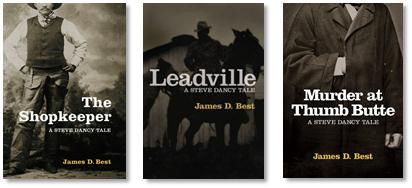
Well, let me tell you about James D. Best’s “The Shopkeeper.”

Author James Best

Author James Best

A few months ago I decided to purposely try to find some indie authors to read. I feel compelled to support fellow indie authors because we share a struggle.

After searching around a bit, I landed on the Steve Dancy novels by James Best. I clicked on the “Look Inside” button and after perusing the first couple of pages of the first book in the series, I bought all three of the Steve Dancy novels. I couldn’t wait to get into the first book in the series when “the box with the smile on it” showed up at the door.

Seriously, “The Shopkeeper” is what every indie author should hope to be writing. It’s compelling fiction. It’s well written. Nothing about the book suggests that Best is an indie author. Best (who I’ll soon be interviewing for a post on the blog) has published the Steve Dancy series through Wheatmark.

I’ve only seen the print books and not the ebooks, but Best’s print books are professional in design and layout. There are not weird formatting problems that leave the impression the author has never seen the way a book is laid out before.

Also, the books are well edited, avoiding another complaint readers often have of the self-published and indie authors: There aren’t a lot of typos or mistakes that will hang up a reader.

But more important than the layout and design of a book is the content. If it’s a good story, I can get past a widow here or an orphan there.

“The Shopkeeper” is great on content. Best’s characters are well-developed, his plot is unique and engaging. At no time reading his book did it cross my mind that I was reading a book by an indie author. I found myself caught up in the story to the point that when I got to the last few chapters I abandoned all other plans for the day and just read until I finished the novel.

Best’s “The Shopkeeper” is the quality we should all be aspiring to. It’s a good story and it’s well told, and it will disabuse readers of the notion that indie authors aren’t good enough to be published by traditional publishing houses.

Let’s face it, publishing, like any other business, is driven by trends that produce dollars, and not all books – no matter how good they might be – are going to hit the bestseller lists. Publishers aren’t looking for a good book as much as they are looking for a book that will sell.

If you don’t believe me, then explain how it is that the pop star Ke$ha has a book published by Simon & Schuster’s Touchstone imprint. Is this quality literature or is it something that offers Simon & Shuster guaranteed dollars because Ke$ha brings a fan base?

So, as an indie author, I love it that there are books out there like James D. Best’s “The Shopkeeper” that dispel the notion that indie fiction can’t be good fiction.

If you enjoy a good Western, do yourself a favor and order “The Shopkeeper.”

First three in the Steve Dancy series. Read these.

First three in the Steve Dancy series. Read these.

Not another Civil War book

I have recently finished writing “Jackson Speed and the Blood Tubs” and am currently writing “Jackson Speed at the High Tide.” Both are set just before or during the American Civil War.

This is hallowed ground I’m treading upon, and I know it. My family is eat up with Civil War (a family farm actually makes an appearance in “Jackson Speed at the High Tide”). My oldest son is named for his sixth great-grandfather who lost his arm at Vicksburg, serving with his father and four brothers. Nobody has more respect for the history of the Civil War than I do.

Jackson Speed was caught on the cover of Harper's Weekly resting a comforting hand on Kate Cherry's bottom during the bombardment of Fort Sumter.

Jackson Speed was caught on the cover of Harper’s Weekly resting a comforting hand on Kate Cherry’s bottom during the bombardment of Fort Sumter.

But let’s be honest … There are a hundred thousand fiction and non-fiction books about the American Civil War, and ninety-nine thousand, nine hundred and ninety-nine of those take an appropriately reverent approach to their subjects.

Even for the most fanatical of Civil War fanatics, you could never hope to read but the smallest percentage of Civil War books. I mean, it takes a couple of decades to get through Shelby Foote’s “The Civil War: A Narrative” (which comes in three volumes of a million pages each), and that’s required reading. If you haven’t read Foote’s Narrative, don’t even talk to me about the Civil War.

Of course, nearly all of it is required reading. Personally, I think the finest Civil War historian has been Glenn Tucker. His histories are incomparable in my opinion. I know a lot of people don’t care for Tucker, and he challenged some long-held views about Gettysburg and Old Peter. Nevertheless, for my money, Tucker does it better than most Civil War historians.

In every Civil War book I’ve ever read, one thing was consistent and clear: The author understood that the American Civil War is sacred. Lincoln is to be revered. Robert E. Lee venerated. The warriors were honorable, the battles worthy, the cause of preserving the Union and freeing the slaves righteous.

The Jackson Speed books are not that.

“Jackson Speed and the Blood Tubs” is the first in the Jackson Speed Memoirs to get Speedy into the Civil War, and only the smallest bit of the book is set during the war.

Speed is there when the cannonballs trace their arc in the Charleston sky to explode among the Yankees in Fort Sumter (no Yankees were killed during the making of this bombardment). And when a cannonball lands at Bobby Lee’s feet on Marye’s Heights overlooking the Battle of Fredericksburg, it’s Ol’ Speedy who’s standing nearby.

If you’re looking for a definitive Civil War novel that captures the horror and tragedy and heartbreak, the courage and honor and dignity, I can recommend some fine books, but Jackson Speed will not provide you with those things.

While I take great pains to ensure historical accuracy and spend more time researching than writing, I do not pretend that “Jackson Speed and the Blood Tubs” or “Jackson Speed at the High Tide” fall into the category of Civil War fiction.

Instead, I’m writing Jackson Speed books set during the Civil War.

Those familiar with Ol’ Speedy from the first volume of his memoirs, “Jackson Speed: The Hero of El Teneria,” know that Speed isn’t your typical Civil War Southern Presbyterian officer who prays for God’s favor when he commences to killing his enemies. No, if Jackie Speed is praying for anything, it’s that God will help him find a hidey-hole to crawl into until the shooting is done.

Speed holds no man in esteem when that man’s goal is to get him at the death, and so Stonewall Jackson is a priggish Presbyterian who looks like a flapping duck any time he attempts to ride his horse; Sherman is a red-headed little devil. To Speed, they are all maniacs and madmen who enjoy the slaughter.

And, of course, his one motivating desire is to get belly-to-belly with any woman unfortunate enough to catch his eye, and so while the cannons are blasting, you can bet that Speed is likely as not hiding in some bedchamber and hoping to use the woman astride him for cover should a cannonball come bouncing into the room.

No, the Jackson Speed Memoirs are not Civil War novels, they are Jackson Speed novels with a Civil War backdrop. My brand of humor and Jackson Speed’s unique observations have no place in Civil War literature.

New indie-authors shouldn’t obsess about marketing

Five months after self-publishing my first book, I’m learning what hundreds of self-published authors before me already know: Writing the book was the easy part.

One of the several reasons I chose to self-publish was that I really didn’t have any interest in sending out hundreds of query letters to publishers and agents and getting back dozens of rejection letters and hundreds of nothing. I didn’t want to go through the effort of trying to market my book to publishers. I just wanted to write.

Honestly, I don’t know if my book is good enough to find its way to the bookshelves of Barnes & Noble through a traditional publisher. I know I wrote a book that I would enjoy reading, and I think it’s pretty good.

So to claim that I “chose to self-publish” might be a bit misleading – the choice was never to publish the traditional route or self-publish; the choice was always to self-publish or put my novel in a desk drawer and forget about it.

As I said, writing the book was the easy part. Selling the book is the hard part. Maybe I didn’t want to have to try to market my book to agents or publishers, but as a self-published author I find I have to try to market my book to readers.

As most or maybe all self-published authors will tell you, very quickly you exhaust the sales you’ll get from your friends on Facebook and Twitter. If you offer your book for free as a Kindle download, you’ll have the joy of watching your book climb steadily among the rankings on Amazon.com, but at that point whatever lingering sales you might have had among your friends are gone.

With tens of thousands of self-published books coming out all the time, trying to find readers and attract those readers is worse than a fulltime job. Literally, for many self-published authors, I suspect it becomes an obsession.

You spend all your time reading blogs. You do internet search after internet search after internet search for “book marketing” or “self-published author marketing” or “how to market a book” or some other such thing.

You visit a thousand websites that claim they will connect authors to readers. You sign up for everything free that they offer and wonder if anyone will ever find your book posted at shvoong.com.

The blogs tell you that you must have reviews on Amazon.com. So you post it on Facebook and Twitter: “If you’ve read my book, please take a second to post a review at amazon.” For each twenty times you post this, one friend writes a review. Even friends who sent you messages and said they liked the book don’t post a review.

So you search for “book review” websites and each time you click a link to one you pray that it’s not “paid book reviews.” And often as not when you find some that claim to be free, you submit your book and wait two months and then get an email that says all their reviewers are backlogged. But don’t be discouraged! For $150 you can try their express two-week service and get a guaranteed book review.

The websites will nickel and dime you to death!

You can buy an ad for your book here for $10, or here for $25, or here for $75. You can be on this website’s front page for a month, or this one’s side rail for two weeks. Some of them are so awful looking that you’re certain the website was designed by a 3-year-old with a Crayon, but you dutifully cough up your $15 and wonder if the ad will produce enough sales to cover the price of the ad.

I’ll give you a hint: It won’t.

And you’re pretty sure, too, that the only traffic coming to any of these websites is other self-published authors just like you who have a book they want to sell, and they’re not looking to buy a book any more than you are. And you’re right.

And finally, you reach a point where you’re ready to scrap your book and figure out how to write YA fiction or something about vampires or (gasp!) erotica, because that stuff seems to be selling like crazy. I’m Rob Peecher, and my erotic novel “Whipped: Jackson Speed and his Slaves” is due out later this year.

Hmmm … actually, that doesn’t sound so bad. I’ll note that in my little black book of book ideas.

Here are the things that I think you’ve got to do (and nearly every self-published author has already done them because these are the first steps we all seem to find as we start with our searches):

  1. Start a blog to write about book stuff. Review other books. Invite other authors to guest blog. Host stops on a blog tour. Write about writing. Write about selling books. Whatever – you need a blog so that readers can find you. And fill your blog with links to your book on Amazon or Barnes & Noble.
  2. Do the Amazon.com author page.
  3. Have a Facebook account that you use to promote your books, along with a fan page. I’m not sold that Twitter or Pinterest are necessary, but if you’ve got the time to devote to that much social networking, then have at it.
  4. Do the whole Goodreads.com thing – author page, author Q&A, giveaways. Of all the websites I’ve tried out, Goodreads.com does seem to actually, in some cases, connect readers to writers.
  5. Book a blog tour, preferably using blogs specific to your genre. If you’ve written Historical Fiction, don’t do a YA or paranormal blog tour.
  6. Find anything free you can do: Author interviews and free book listings. Maximize the opportunities that someone might accidentally find your book, but don’t expect any of this to catapult you to the NY Times bestseller list.

If you’re self publishing, I think these six steps are the bare minimum that you absolutely must be willing to do. However, Numbers 5 and 6 I would do only up to the point that it is not overly burdensome. Judging from what other self-published authors have written and my own experiences, I suspect that your book sales will continue to be disappointing even after you’ve done these things. I would strongly recommend that you do not invest too much time and energy into these things.

I have not paid for any book reviews, so I cannot comment on the value of paying for reviews. It seems seedy to me, and my understanding is that Amazon.com only allows paid book reviews to be posted on its site from Kirkus Indie and Foreword Clarion. Those reviews are expensive, and I can’t afford to put that much money into a hobby. I also understand that Amazon periodically purges other, cheaper paid reviews, so whatever you paid for that review it is now all but worthless.

It seems to me that a lot of the self-published authors are probably people who really love their project and are emotionally invested in it. I can understand how they might easily be lured into advertising on various websites or spending money for reviews. I honestly cannot imagine that this money is well spent.

After months of obsessing and searching the internet for the magic bullet that will help me boost sales of my book, I’ve pretty much decided to give up trying to market my book, at least for a while.

I will continue to do those things among the six “bare minimums,” but I do not think these are things that will skyrocket my book sales. When I have the chance, I’ll do author talks and book signings. But for the present I think my time and money are better spent just simply writing books.

The really successful indie-authors have at least one thing in common: They have written a lot of books. Often, these are authors who have written several books over the years and finally get that one hit. At that point, too, they usually find sales of their earlier books increasing.

“Jackson Speed: The Hero of El Teneria” seems awfully lonely out there by itself, just hanging out at Amazon.com as the only book by Robert Peecher.

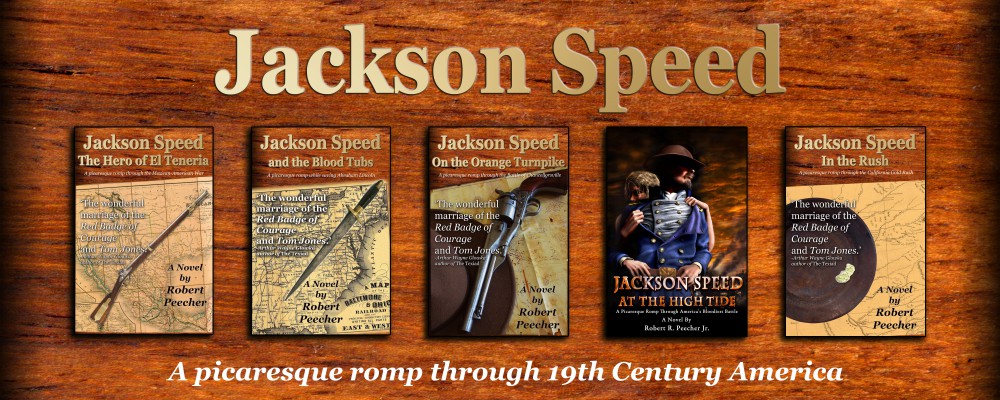
In the coming weeks I hope to have the second Jackson Speed novel available. “Jackson Speed and the Blood Tubs” – a novel about Speed’s involvement with Allan Pinkerton in foiling the Baltimore plot to kill Abraham Lincoln prior to his inauguration.

And after that, I plan to publish a collection of my newspaper humor columns “Four Things My Wife Hates About Mornings.”

I am convinced that indie-authors who self-publish through Createspace and have no connections in the publishing industry are probably deluding themselves if they’ve published one book and hope to see it sitting among the bestsellers.

So my advice to the newly self-published and indie authors (with five months of experience to back it up, don’t ye know) would be to not obsess over sales or marketing. Spend your time writing books. Do the basics, those things that must be done, but don’t waste your time and money pursuing readers who are probably not perusing shvoong.com looking for their next book to read.
Jackson Speed and the Photo Shoot

You ladies are lucky there's no abolitionist poetry around!

You ladies are lucky there’s no abolitionist poetry around!


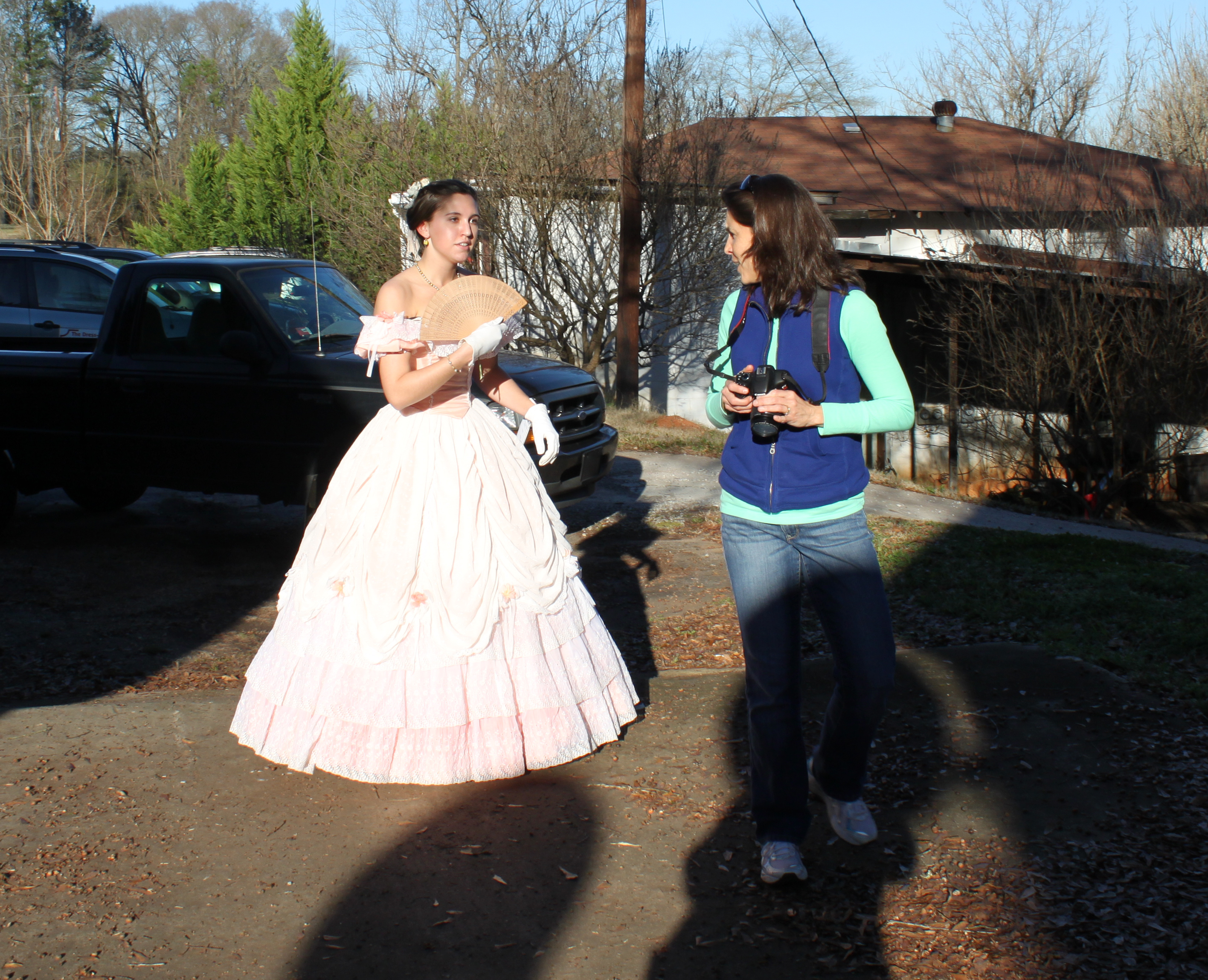
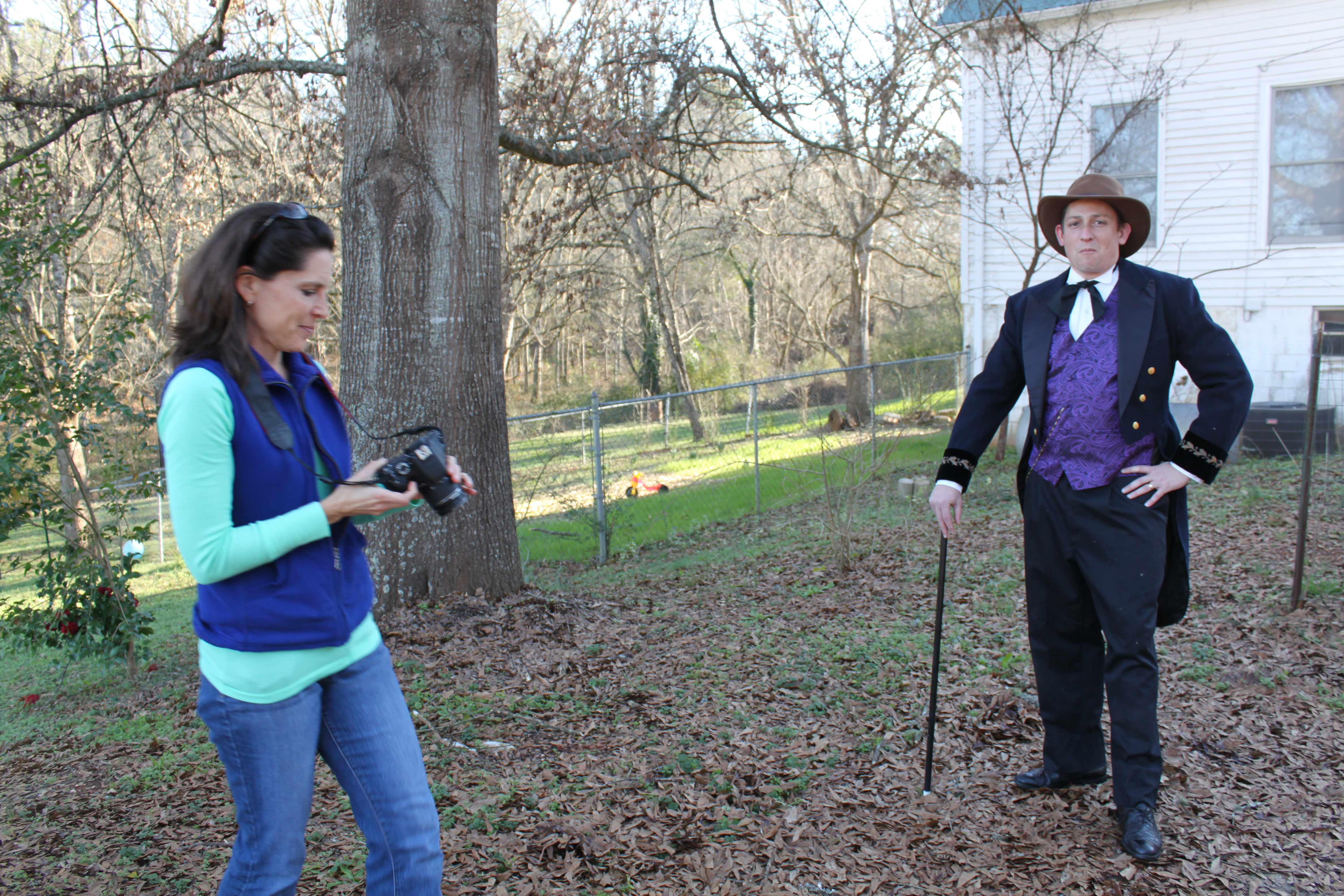
A friend of mine, Kate Sherrill, will be painting the cover of the next Jackson Speed book. Kate wanted to put together some photographs of people in period clothing, and she will paint from those photographs.

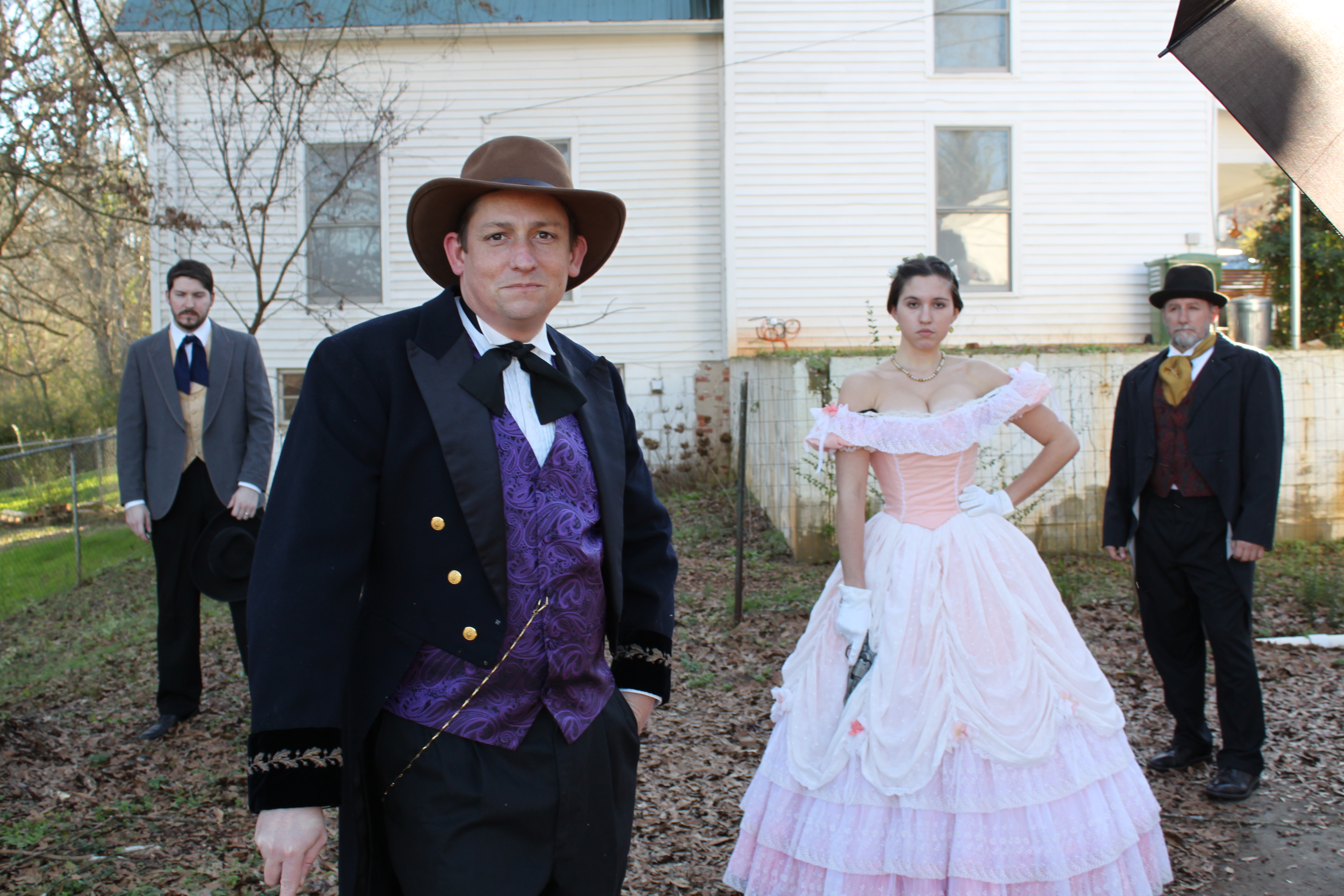
So yesterday I went out to the Dress Up Box in High Shoals, Georgia, where Mary Delaplane dressed me up as Jackson Speed. Kate found some volunteers to stand in for some of the other characters from the novel. Sam Chafin is our chief Blood Tub bad guy, looking all sinister with a switch-blade comb. Jim Kenaston portrayed a disapproving and jealous Allan Pinkerton. And Leah Morris, a student at UGA, stood in for Kate Warne, the female Pinkerton detective who convinces Speed to hang around Baltimore and save Abe Lincoln’s life.

Leah as Kate Warne and Kate Sherrill, the cover artist.

Leah as Kate Warne and Kate Sherrill, the cover artist.


It took Leah 20 minutes or more to get her hair done and the dress on, and we were done taking pictures in about half that time.

We had all kinds of trouble finding a pair of pants that covered my ankles. Everything Mary gave me was much too short. In the end, she handed me a pair of size 38 pants that were enormous around the waist, and so we slid those pants halfway down my hips to cover my ankles and the problem was solved. I was sort of like a Civil War-era gangsta Jackson Speed with my pants pulled down.

Kate checks to see if I broke her camera.

Kate checks to see if I broke her camera.


While trying to find a pair of pants that fit, I was reminded of a story I heard about Abraham Lincoln. As I everyone knows, Abe Lincoln was a tall man, and especially tall for his time. A newspaper reporter once pointed out to him that he was tall, and asked him how long a man’s legs should be.

“Long enough to reach the floor,” Lincoln replied.

I’ve always gotten a kick out of that story.

John and Sam and I examining the Civil War pistol Mary Delaplane brought to use as a prop.

John and Sam and I examining the Civil War pistol Mary Delaplane brought to use as a prop.


I know you’ve heard tales of the high-society, wealth and glamour lifestyle of fashion models. This being my first foray into that lifestyle, I can tell you that our models were well-paid. My wife Jean baked up a batch of brownies that we took to the photo shoot, and I got everyone’s address so that when the book comes out I can send everyone a copy of “Jackson Speed and the Blood Tubs.”

I am working on the final edits of the novel and expect it to be released in a few weeks. In the meantime, if you’ve not yet read “Jackson Speed: The Hero of El Teneria,” I would recommend that you do so. It’s probably the most fun you can have reading about the Mexican-American War.

Our four models portraying characters from the book.

Our four models portraying characters from the book.

Free download of “Jackson Speed: The Hero of El Teneria”

For three days, from Christmas Day through December 27, I will be offering free Kindle downloads of “Jackson Speed: The Hero of El Teneria.”

So if you pull a Kindle out of your stocking on Christmas morning, be sure to snag a free copy of “El Teneria.” If you know someone who is getting a Kindle, let them know that they don’t have to spend any of their Christmas cash to get themselves some quality entertainment.

It’s a good book, and at the price of FREE you can’t hardly beat it.

I threw a book signing and nobody came

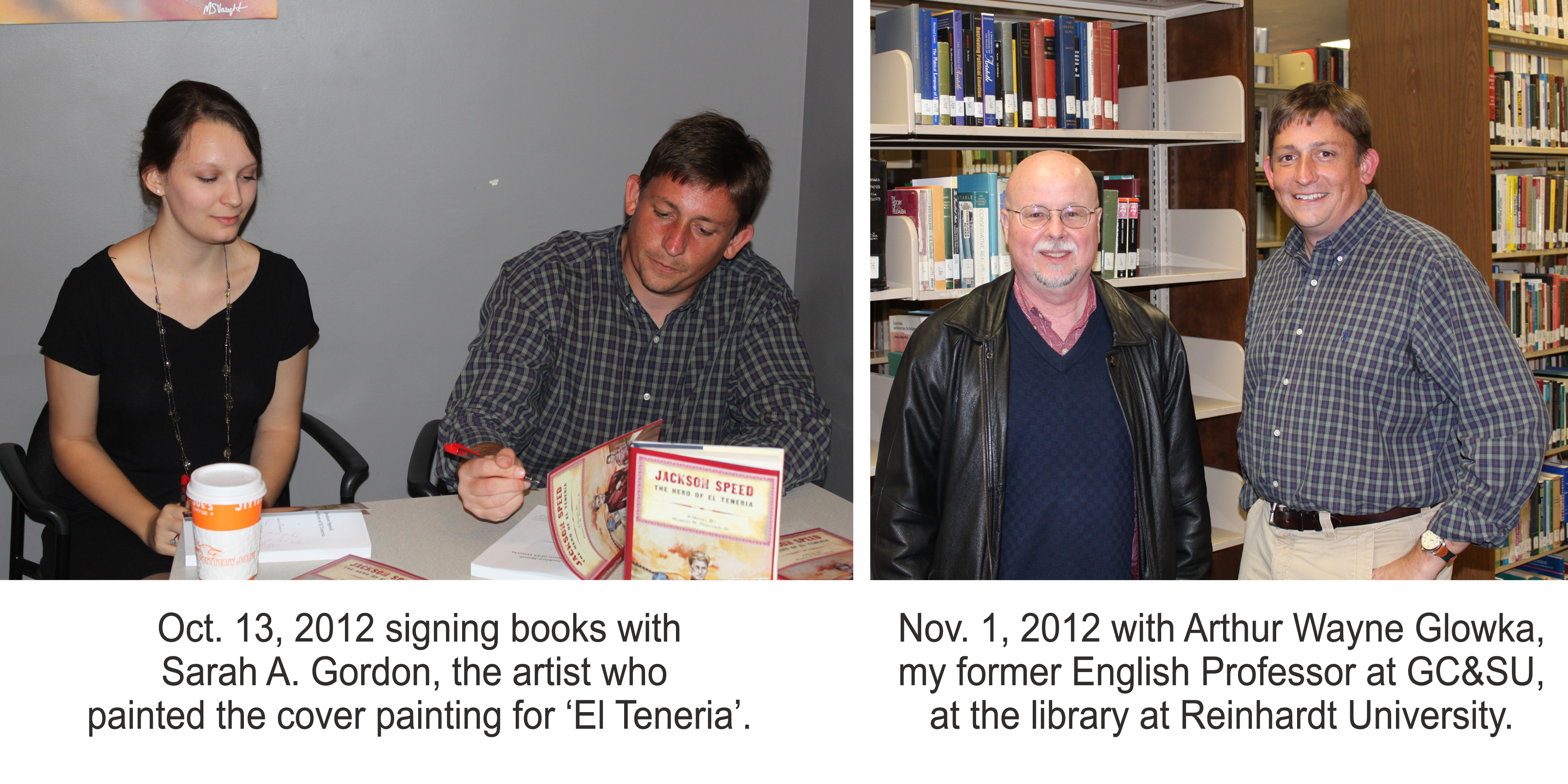
The Oconee County Library was kind enough to invite me to come and sign books and give an author talk. If you missed it, you were not alone.

Rob Peecher and Melissa Bowden at Library book signing.

Rob Peecher and Melissa Bowden at Library book signing.

My first book signing and author talk was fabulous! Standing room only. People (my dad and son) lined up out the door because there wasn’t enough room for them. A couple I’ve never met showed up with copies of the book they’d already bought. One of my former reporters, Rebecca Rose, came from Atlanta for the book signing. It was really a great deal.

My second author talk was to a history class at Reinhardt University. College students don’t buy a lot of books, but they fill a room when they’re required to be there. My third talk was at Reinhardt’s library. Not a lot of people showed up voluntarily, but my friend Arthur Wayne Glowka rounded up a creative writing class, and the seats were filled.

Wednesday at the library – not so much.

Two women who are members of the Friends of the Library group were there to help sell books. They provided refreshments. My wife was there along with one of our sons, and my parents came. At 7 p.m. we were standing around waiting for someone else to come in. At 7:05 and 7:10 we were still waiting around. Melissa Bowden, one of the Library Friends (who bakes good brownies, by the way) fetched her husband John out of the library, and then Wesley Snipes (yes, THE Wesley Snipes who plays soccer with me!) came in. Wesley wore a tie, so I immediately felt under-dressed.

So yes, the people in the room with the last name Peecher outnumbered those in the room with other last names, but as anyone who has been around me since August will tell you, I’ll talk to everyone I can about the Jackson Speed novels.

And truthfully, I thought it went pretty well. Everyone asked questions when I was done, and the poor women with the Library Friends bought multiple books (I think they felt sorry for me) and Wesley bought one, too, so as far as sales go it was my most successful talk/signing to date (college students don’t buy books that aren’t on a syllabus somewhere, and most everyone who came to the first signing/talk already had a book).

I understand this is something that happens commonly to lesser known authors. Honestly, Wednesday night I was very disappointed with the lack of turnout. There are, I’m sure, lots of reasons for it (I was competing with the annual airing of the Charlie Brown Christmas Special, and it’s nearly impossible to compete with Peanuts) but after a couple of days I’ve become a little more circumspect about it.

I realize this is part of it. As an indie author desperately trying to promote a book, you jump at every chance you get to be in front of people with copies of your book. You have to do that. And sometimes there’s a Charlie Brown Special on the television, and no one is going to be there.

I remember many, many years ago when there were still book stores in the mall, I walked past a guy who had a table set up outside of Waldenbooks. He was selling signed copies of his book about the Civil War. I felt awful for him because he looked so lonely. I bought a book and gave it to my dad as a Christmas gift. The memory of that guy is why I drag Jean or at least one of the boys to all of my book signings. I may not sign books, but I won’t sit at a table by myself.

I did learn some lessons.

I didn’t do much to promote the book signing myself, thinking the library does these all the time and probably could promote it as well or better than I could. I won’t make that mistake again. Self-promotion absolutely must be the rallying cry of every indie author. If nothing else, you force a couple of your friends to go and ask them to bring someone.

I picked a time and date that was convenient for me during a busy time of the year, but I should have picked a time and date that might have inconvenienced me but been more convenient for people who might be willing to show up to an author talk and book signing if it wasn’t at 7 p.m. on a Wednesday.

If you want to guarantee a crowd, though, the best thing to do is get yourself invited to come talk to a college class.

Would I do a book signing at the Library again? Even though the turnout wasn’t spectacular, as an indie author you take any opportunity you can get. When “Jackson Speed and the Blood Tubs” comes out (January, I hope), I’d be thrilled to go back to the library.

Meanwhile, I found this video that made me feel a little better, and even if you’ve never experienced the disappointment of holding a book signing and author talk where nobody showed up, I expect you’ll enjoy it.

Author talk and book signing

I’m wearing a different shirt this time.

When I posted some photos from my first two book signings on Facebook, I realized (seeing the photos side-by-side) that I wore the same shirt to both signings. Tonight, for my third book signing, I’m changing shirts.

I may even take a shower this time.

So if you’re anywhere around Watkinsville or Athens tonight (Wednesday, Nov. 28) please swing by the Oconee County Library in Watkinsville where I will give a little author talk and sign books. Starts at 7 p.m., and I’m told there will be a table for refreshments (I do not know if there will be actual refreshments).

Thankful for that rascal Jackson Speed!

It’s been a very thankful week in the world of Jackson Speed.

Wednesday I took most of the day off from work and stayed home to write. It wasn’t planned or expected, but by 9 p.m. I had finished writing the second Jackson Speed novel. Even better, I added a final chapter to the book that was a surprise to me, and I really loved the way it turned out.

With both of the Jackson Speed novels now written (and those that I have not yet written) I started with an idea of putting Ol’ Speedy in a specific place and time and the general overview of the story was clear to me from the outset. As I wrote, the details emerged, but I knew where I was heading with it.

But Wednesday morning as I was writing, I had a little bit of inspiration. I rewrote a few lines to add a final twist to the plot I had initially envisioned. And that was fun. A good book, for me, is one that provides moments where I cannot predict what will come next. But when I write a book, my expectation is that I generally know where my characters and I are headed. So this last little bit, unplanned, was pretty fun for me as the writer, and I’m really, really pleased with the way it turned out.

Then Wednesday evening – just as I was finishing – one of my best friends from all those decades ago when we were in high school sent me a text. Drew Mapp was up from Florida for the holidays, so we went out and grabbed a beer late Wednesday night. The last time I saw Drew in September I’d given him a copy of the first Jackson Speed book. Wednesday he told me he’d read it and enjoyed it, and it was great fun to be out sort-of celebrating the completion of the second Jackson Speed book with someone who’d read the first Jackson Speed book.

As I noted last week, I’ve gotten another review at Amazon.com for Jackson Speed (it was Review Number 4).

This morning I came into the office and got two more Jackson Speed surprises: I sold a book over Thanksgiving, and it’s always fun to see that I’ve increased sales. Also, I’ve gotten a fifth review at Amazon.com.

The reviewer referred to Jackson Speed as a twisted, Southern Casanova, which is very ironic because I’m fairly sure that was one of my nicknames in college.

Despite my book sale over Thanksgiving, I am still well short of becoming a wealthy novelist (haha!) but I am continuing to have so much fun writing about Jackson Speed and getting feedback from people who have read about him, that I’ve got to say I am very, very thankful this year for Jackson Speed and the massive amount of fun he’s brought into my life.

Customer reviews

This morning I received my fourth customer review for “Jackson Speed: The Hero of El Teneria” over at Amazon.com.

“The history is true and the fiction is fun,” is one of the things that the reviewer said, and I love that! When I set out to write the Jackson Speed Memoirs those were my two primary goals: To write books that are 1) fun to read with a good mix of humor, action and romance (okay, call it smut if you want) in a quick page-turner; and 2) historically accurate.

I’ve spent a lot of time researching these books, and I want that to show. When readers say, “That can’t possibly be true!” and then they go and look up the “Battle of the Boat” or the “Blood Tubs” or the “Wide Awakes” I want them to say, “Wow! I can’t believe that was true!”

History is fascinating and wonderful stuff. It’s hard to imagine some of the things people have done: The bizarre, the amazing, the sinister and cruel, the courageous … and I am thoroughly enjoying walking through some fascinating history with Jackson Speed.

If you’ve read the first “Jackson Speed” book, post a review over at Amazon.com. If you haven’t read it, then why are you wasting your time on any other pursuits?